Klaas Wynne

We study the physics of liquids, glasses, and crystallisation. Starting from ultrafast spectroscopy, using optical Kerr-effect (OKE) measurements spanning femtoseconds to nanoseconds, the group's interests have expanded into glass transitions, liquid-liquid phase transitions, crystal nucleation, and most recently the rational design of amorphous pharmaceutical materials. A recurring theme is that the molecular-level structure and dynamics of liquids determine what happens when they are cooled, concentrated, or mixed: whether they crystallise, vitrify, or phase-separate, and how these outcomes can be controlled. Our experimental techniques now span 18 orders of magnitude in time, from femtosecond laser spectroscopy to month-long stability studies of amorphous drugs, complemented by confocal Raman microscopy, mass spectrometry, electron microscopy, calorimetry, rheology, and synchrotron X-ray scattering.

Klaas Wynne
Chair of Chemical Physics
University of Glasgow

Google Scholar | ORCID

Map to my office in Joseph Black

Check out open PhD and postdoctoral positions in the BCP group here

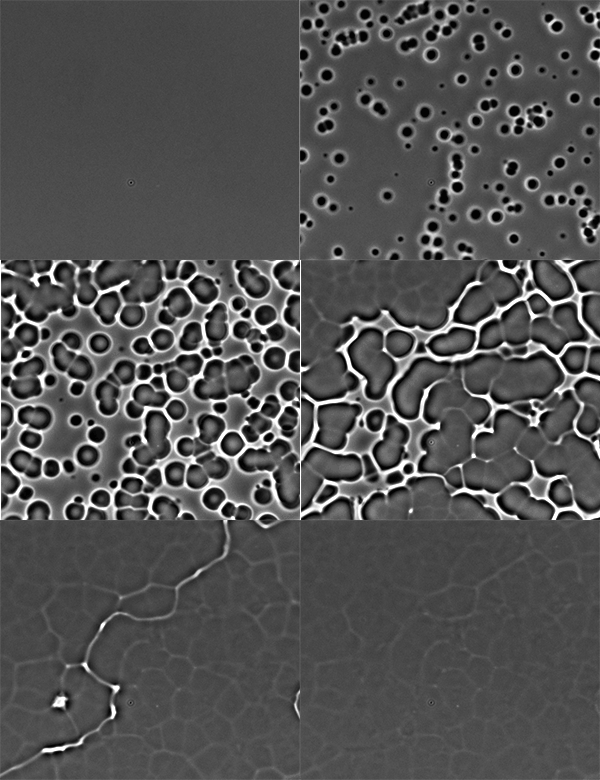
Liquid-liquid transition in triphenyl phosphite (TPP)

Animation of a liquid-liquid transition in triphenyl phosphite (TPP) taking place through nucleation as observed through phase-contrast microscopy.
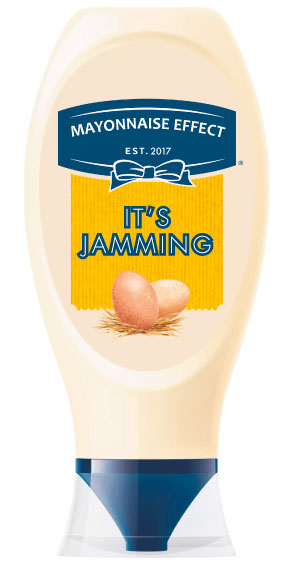
The Mayonnaise Effect

Our research is funded by
ERCLeverhulme Trust EPSRC
Diamond Light Source MRC

Ben, Klaas, Zhiyu, Chris, Mario, and Ankita
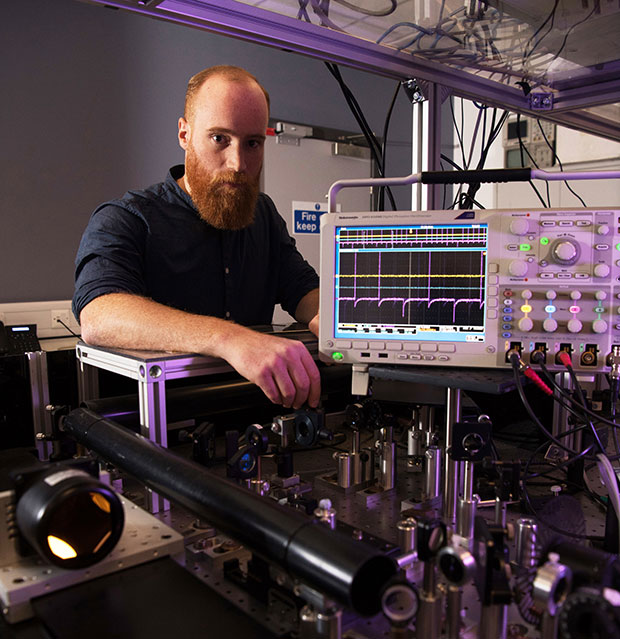
Mario González Jiménez operating the femtosecond laser amplifier

Dr. Mario González Jiménez with our amplified femtosecond laser system.

  • 26 March 2026: New preprint from our collaboration with Adam Dobson's lab at Glasgow: can an organism's chemical fingerprint predict how it will respond to stress? Yes. Using ATR-FTIR spectroscopy + machine learning — methods developed in my group by Mario González-Jiménez — the team shows that "chemotypes" barcode biological variation (sex, genotype, diet, ageing) in Drosophila and, most excitingly, predict starvation resistance in independent populations *before* exposure. The logic: metabolism integrates diverse drivers of biological variation, so aggregate chemistry encodes phenotype. FTIR reads it cheaply and fast; ML decodes it. FTIR already works with human biofluids, so the path toward personalised prediction of treatment response is plausible. Wonderful to see our IR/ML methods from vector biology applied in a completely new context. Congratulations Rita Ibrahim, Mario González-Jiménez, Adam Dobson and the team. https://www.biorxiv.org/content/10.64898/2026.03.22.713522v1
  • 26 February 2026: We show that configurational entropy can suppress crystallisation in multicomponent molecular systems, leading to vitrification beyond a critical component number. This provides an entropy-based route to stable molecular glasses and high-entropy amorphous drugs (HEADs). https://chemrxiv.org/doi/full/10.26434/chemrxiv.15000448/v1This work was funded by an European Research Council (ERC) Advanced Grant.
  • 3 February 2026: In close collaboration with Daniel Kuroda (Louisiana State), we use terahertz spectroscopy to reveal phonon-like collective vibrations in highly concentrated lithium electrolytes, indicating transient crystalline-like order and a hopping mechanism for lithium transport. https://chemrxiv.org/doi/full/10.26434/chemrxiv.10001873/v1 This work was funded by an European Research Council (ERC) Advanced Grant.
  • 28 January 2026: With Rebecca Beveridge, we introduce a rapid screening approach to predict co-crystal, co-amorphous, or phase-separated outcomes by analysing noncovalent oligomers in solution using nanoelectrospray mass spectrometry. https://chemrxiv.org/doi/full/10.26434/chemrxiv.10001669/v1 This work was funded by an European Research Council (ERC) Advanced Grant.
  • 22 January 2026: With Rebecca Beveridge and Ian MacLaren, we show that common inorganic salt solutions contain persistent amorphous ion aggregates, even in undersaturated conditions, challenging the textbook picture of dilute electrolytes and nucleation. https://chemrxiv.org/doi/full/10.26434/chemrxiv-2025-x4kh4/v2 This work was funded by an European Research Council (ERC) Advanced Grant.
  • 29 July 2024: Our paper was featured by the RSC: Amorphous clusters across a vast range of sizes found to affect crystal nucleation.
  • 10 July 2024: Just out in ChemicalScience https://doi.org/10.1039/D4SC00452C our work on the general role of amorphous aggregates in crystal nucleation in collaboration with the Rebecca Beveridge group at Strathclyde. Surprisingly, the amorphous aggregates have a vast range of sizes from molecular to mesoscopic. These results are explained by a simple two-step nucleation model successfully accounting for our and previous results in the literature. This ties in with our recent study of concentrated salt solutions pubs.acs.org/doi/10.1021/ja We consistently find that solutions are far from homogeneous with implications to nucleation and other material properties.
  • 20 February 2024: Pleased with the publication of https://doi.org/10.1063/5.0169326 in Review of Scientific Instruments. Need to do rheology on an air sensitive sample? Use our 3D-printed cup filled with heavier-than-air gas such as sulfur hexafluoride or xenon to keep the air out! Simple but effective. We used this in our recent paper https://doi.org/10.1021/jacs.3c07110 on a double glass transition in (moisture reactive) titanium alkoxides but also applicable to, for example, hygroscopic ionic liquids. By Ben Russell funded by ERC and EPSRC.
  • 21 December 2023: Very excited by the publication of https://pubs.acs.org/doi/10.1021/jacs.3c09421 in JACS Characterising and manipulating the translational dynamics of water in aqueous salt solutions is critical to a wide range of technologies rom the initial stages of nucleation and crystallisation to the mechanism of ion transport in water-in-salt electrolytes for batteries. We have used ultrafast optical Kerr-effect spectroscopy to obtain very high-quality reduced Raman spectra in the gigahertz to terahertz range. This was applied to a range of chloride salts at concentrations as high as 15 M, where there are only ~2.5 (!) water molecules per ion pair. This has allowed us to provide clear evidence for two distinct populations of water molecules: those solvated by ions showing strongly slowed down dynamics and those with essentially unchanged bulk properties. This ties in with our recent work on supersaturated solutions https://doi.org/10.26434/chemrxiv-2023-18zk5-v3 showing they are not homogeneous in the slightest.
  • 2 October 2023: New PhD student Laure-Anne Hayes started today. She will start out working on some interesting cross-over between between molecular and soft-matter physics.
  • 24 January 2023: A press release on our NatComm paper came out: SCIENTISTS OPEN NEW WINDOW ON THE PHYSICS OF GLASS FORMATION
  • 16 January 2023: Our paper "Understanding the emergence of the boson peak in molecular glasses" has come out in NatureComms https://doi.org/10.1038/s41467-023-35878-6. Most mysterious aspect of glass transition is the boson peak: a small effect but reflection of supramolecular structures responsible for formation of glass instead of crystal. Widely studied but poorly observed as obscured by other contributions. We used symmetry to get clean view of boson peak in tetrabutyl orthosilicate using Raman, a pre-peak in SAXS/WAXS, and boson peak in calorimetry. MD simulations (constrained by experiments) show boson peak caused by clusters of over-coordinated molecules.This opens way to investigation of detailed changes behaviour boson-peak & glasses in general as function temperature, pressure, fragility, & other physicochemical parameters. Fantastic collaboration with Gabriele Sosso (@SossoGroup) & PhD student Trent Barnard who did MD (@warwickchem) and the late Paul McMillan (@UCLChemistry). OKE by @magonji , rheology/DSC Ben Russell & undergrad Laure-Anne Hayes, DFT Nikita Tukachev & Hans Senn (@UofGChem),NMR Uroš Javornik & Gregor Mali (@kemijski ), SAXS/WAXS at the @DiamondLightSou with @evilokapi & Martin Wilding (@ChemistryCU), & calorimetry by Motohiro Nakano & Yuji Miyazaki (@ScienceOU).With funding from @ERC_Research#AdG, @LeverhulmeTrust , @DiamondLightSou , @EPSRC , @ARRS_rfo , HPC Midlands+ ConsortiumThe molecules were serendipitously "discovered" (in the @SigmaAldrich catalogue) by PhD student Andy Farrell & undergrad @NotchSg in 2019.
  • 20 Sep 2022: Warm welcome to postdoc Dr. Ankita Das (PhD @TIFRScience & briefly @UofIllinois ) who will be working on laser-induced crystal nucleation funded by our ERC AdG CONTROL. She already has broad range of skills from synthesis to ultrafast lasers and plasmonics.
  • 8 August 2022: Met with the ambassador of the Kingdom of the Netherlands Karol van Oosterom to talk about scientific cooperation between Scotland and the Netherlands
  • 27 June 2022: Our research on malaria and spectroscopy was featured on BBC Arabic Science programme
  • 7 April 2022: Zhiyu’s lovely paper on the role of metastable amorphous intermediates in laser-induced nucleation has come out (ASAP) in JACS https://pubs.acs.org/doi/10.1021/jacs.1c11154 Laser-induced nucleation was first discovered in 1996 but never properly explained. We previously thought that it might be related to liquid-liquid phase separation. Now, in glycine at least, we have found that the key step is the formation of amorphous particles, which when touched by a laser trigger the nucleation of crystals. The preponderance of gamma glycine over alpha glycine in our experiments suggests that the laser action is through the Kerr effect. There are plenty of reasons to believe that both amorphous particle formation and its role in nucleation (laser induced or otherwise) are much more common, so expect to hear more about this sort of thing…
  • 3 February 2022: Former PhD student Andrew Farrell passed his viva this morning with only minor corrections. Thanks to external Steve Meech (UEA Chemistry ) and internal Gordon Hedley.
  • 16 June 2021: In our publication in Physical Chemistry Chemical Physics,  23, 13250 – 13260 (2021), we use femtosecond optical Kerr-effect spectroscopy to determine the low-frequency Raman spectra of nucleotides and oligomeric DNAs with unrivalled dynamic range and signal-to-noise. These samples were carefully chosen to form G-quadruplexes, structures formed by four strands of DNA, under the appropriate conditions. We find that the G-quadruplexes exhibit a highly unusual group of gigahertz to terahertz highly underdamped delocalised vibrational modes. As these modes are near kBT/h at room temperature, they are expected to be the thermally excited modes required to understand the interaction of DNA with proteins. This provides a new perspective on the role of low-frequency vibrational modes in the biological function of DNA.
  • 13 April 2020: Just accepted in JACS, https://pubs.acs.org/doi/abs/10.1021/jacs.0c01712, shows why liquid-liquid transitions happen: competition between different local molecular packings resembling crystal polymorphs results in transition from geometric frustration to kinetic frustration. Funded by @ERC_Research, @EPSRC, @LeverhulmeTrust, and @DiamondLightSou. So many contributions: PhDs @finlaywalton, John Bolling and Andy Farrell, RAs @heschemistrypro and @magonji, as well as Claire Wilson, Hans Senn, Gianfelice Cinque. And @UofGChem BSc undergrad Jamie McEwen who serendipitously found key that solved the mystery. And last but not least, our first ever crystal structure in the CCDC. F. Walton, J. Bolling, A. Farrell, J. MacEwen, C. Syme, M. González Jiménez, H. Senn, C. Wilson, G. Cinque, and K. Wynne, ‘Polyamorphism mirrors polymorphism in the liquid–liquid transition of a molecular liquid’, ChemRxiv (https://dx.doi.org/10.26434/chemrxiv.9891491.v2) and J. Am. Chem. Soc. in press (2020).
  • 13 January 2020: We have a PhD positionin Chemistry for UK/EU nationals – Laser control over crystal nucleation – Closing Date: 1 April 2020
  • 10 December 2019: Congratulations to Finlay Walton who passed his PhD viva today with minor corrections. Thanks to external Andy Alexander and internal Adrian Lapthorn.
  • 4 October 2019: Finlay's paper "Using optical tweezing to control phase separation and nucleation near a liquid–liquid critical point" came out in Soft Matter, see https://dx.doi.org/10.1039/C9SM01297D.
  • 16 September 2019: Our new paper "Prediction of mosquito species and population age structure using mid-infrared spectroscopy and supervised machine learning" has come out in Welcome Open Research 4, 76 (2019) doi: 0.12688/wellcomeopenres.15201.3 feauturing an international author list: Mario González Jiménez, Simon A. Babayan, Pegah Khazaeli1, Margaret Doyle, Finlay Walton, Elliott Reedy, Thomas Glew, Mafalda Viana, Lisa Ranford-Cartwright, Abdoulaye Niang, Doreen J. Siria, Fredros O. Okumu, Abdoulaye Diabaté, Heather M. Ferguson, Francesco Baldini, Klaas Wynne.
  • 11 July, 2019: The School of Chemistry has a lectureship (assistant prof.) position in Physical Chemistry, see https://www.jobs.ac.uk/job/BTM762/lecturer-in-physical-chemistry …. The applicant’s research should strategically align with that of the Chemical Photonics Group (https://www.gla.ac.uk/schools/chemistry/research/cp/ …). Closing date: 1 August 2019.
  • 19 June, 2019: We have two postdoctoral position available now funded by the five-year European Research Council (ERC) funded project Laser Control over Crystal Nucleation (CONTROL), which aims to develop a novel platform for the manipulation of phase transitions, crystal nucleation, and polymorph control based on optical tweezing and plasmonic tweezing.  Closing Date: 12 August 2019. More details here.
  • 3 June 2019: A polarisation microscopy photo of a new polymorph of a molecular crystal growing into another polymorph won the EPSRC Science Photo Competition Eureka & Discovery category. Photo by @finlaywalton Manuscript in preparation... Research funded by @EPSRC
  • 28 March 2019: KW has been awarded a €2.49M European Research Council (ERC) Advanced Grant: CONTROL - Laser control over crystal nucleation. We will use sophisticated light sources to “pull” crystals out of solution, control their properties, and thereby enable new applications in the pharmaceutical industry and elsewhere. See https://erc.europa.eu/news/erc-2018-advanced-grants-results
  • 28 January 2019: Maternity cover job opening (in principle 6 months), Editorial Support Assistant to assist KW as JACS associate editor, linked to the University of Glasgow, part time, see https://www.jobs.ac.uk/job/BPT274/editorial-support-assistant
  • 22 December, 2018: Our mosquito work made it into the christmas (22 December 2018) issue of The Economist. Fraunhofer lines?!?! Anyway, the gist is about right and at least they mention Mario González Jiménez and Fredros Okumu.
  • 29 November 2018: Today we were awarded a Leverhulme Research Project Grant, 'Delocalised phonon-like modes in organic and bio-molecules', jointly with Adrain Lapthorn and Hans Senn. This will fund our experimental work on delocalised modes in proteins and DNA as well as novel MD simulations.
  • 1 October 2018: Delighted that today Josh Mitton is starting on a joint machine learning PhD project with Roderick Murray-Smith and Francesco Baldini (and unofficially but no less importantly Roman Biek, Simon Babayan, Lisa Ranford-Cartwright, Heather Ferguson, Adrian Lapthorn, and Simon Rogers)
  • 2 August 2018: Judith's nice paper "Frustration vs Prenucleation: Understanding the Surprising Stability of Supersaturated Sodium Thiosulfate Solutions" came out in JPC B http://dx.doi.org/0.1021/acs.jpcb.8b04112
  • 8 May 2018: KW is given the 2018 Chemical Dynamics Award of the Royal Society of Chemistry for outstanding contributions to time-resolved spectroscopy. 
  • 9 March 2018: Dr Mario González Jiménez wins the 2018 RSC Twitter Conference poster prize in the #RSCPhys category with https://twitter.com/magonji/status/970952685938757632
  • 5 March 2018: Our paper "Control over phase separation and nucleation using a laser-tweezing potential", Nature Chemistry 10, 506 (2018) (http://doi.org/10.1038/s41557-018-0009-8) just came out!
  • 2 March 2018: I am delighted to be able to announce that, funded by EPSRC, I have published a paper in J Phys Chem with a picture of a mayonnaise jar. See doi: 10.1021/acs.jpcb.8b01006. As promised, I will eat my hat with mayonnaise over the next few days.
  • 2 January 2018: "The Mayonnaise Effect" is the #1 most read article in JPCLett of the past month. See http://pubs.acs.org/doi/10.1021/acs.jpclett.7b03207.
  • 8 December 2017: My paper "The Mayonnaise Effect" came out in JPC Lett. See http://pubs.acs.org/doi/10.1021/acs.jpclett.7b03207.
  • 29 November 2017: We have a prestigious Lord Kelvin-Adam Smith (LKAS) 4-year PhD studentship on “Machine learning in spectroscopy” available for UK, EU, and international students. We will combine expertise in chemistry, spectroscopy, entomology, and computing science to apply state-of-the-art machine-learning techniques to the determination of traits in insects and the design of novel molecules for attracting or repelling insects. The application deadline is 12 noon, Friday 12th January 2018. Much more information at https://tinyurl.com/y927jhpo.
  • 27 October 2017: Wahey again! PhD student Judith Reichenbach passed her PhD viva today with her thesis "Structure and Dynamics in Ionic Liquids and Concentrated Salt Solutions: An Ultrafast Spectroscopy Study"! Thanks to external examiner Steve Meech, internal Steven Sproules, and convenor Adrian Lapthorn.
  • 28 September 2017: Wahey! PhD student Joanna (Asia) Mosses passed her PhD viva today with her thesis 'Phase transitions and mesophases in molecular liquids and solutions: spectroscopic and imaging studies’'! A thank you also to the external examiner Mischa Bonn, internal Malcolm Kadodwala, and convenor Justin Hargreaves.
  • 15 June 2017: Our paper "Spectrum of slow and super-slow (picosecond to nanosecond) water dynamics around organic and biological solutes" by Gopa Ramakrishnan, Mario González-Jiménez, Adrian Lapthorn, and Klaas Wynne, on the universally imhomogeneous solvation shell around solutes came out in J.Phys.Chem. Lett today. See http://pubs.acs.org/doi/abs/10.1021/acs.jpclett.7b01127. Should be freely available soon.
  • 31 May 2017: We got a paper out in JACS today "Phonon-like Hydrogen-Bond Modes in Protic Ionic Liquids". PhD student Judith's first paper in the best chemistry journal in the universe (... :-)) Also with PhD student Stuart Ruddell in David France's group, former undergrad Julio Lemes, David Turton, and Mario González. Download for free at http://dx.doi.org/10.1021/jacs.7b03036
  • 19 April 2017: Our paper "Ultrafast 2D-IR and optical Kerr effect spectroscopy reveal the impact of duplex melting on the structural dynamics of DNA" came out in PCCP today. It's open access so download it for free. Collaboration with Neil Hunt and colleagues at Strathclyde and Paul Donaldson and colleagues at the STFC Central Laser Facility.
  • 1 April 2017: Started as Associate Editor of the Journal of the American Chemical Society (JACS)!
  • 17 February 2017: Our paper "Frustration of crystallisation by a liquid–crystal phase" came out in Scientific Reports today. Read more about this research: Frustrating liquid crystals and watch a movie about it on YouTube here.
  • November 2016: We are looking for somebody to join us as a PhD student to work on imaging and laser manipulation of nucleation phenomena. A great project on the border between physics,chemistry, and engineering.
  • 1 October 2016: Andrew Farrell joined the group as a new PhD student to work on ultrafast spectroscopy.
  • 5 July 2016: Spain's Consul General visits the group on invitation by Mario.
  • 6 June 2016: A number of places have taken up our press release. Exclusive: Professor Klaas Wynne On Decoding DNA Sound Bubbles & Human Life on HealthAim.com is probably the weirdest. Also Vibraciones y burbujas de sonido del ADN son esenciales para la vida shown on the homepage of SINC.
  • 1 June 2016: Our paper Observation of coherent delocalised phonon-like modes in DNA under physiological conditions was published to day in Nature Communications. See also Sound-like bubbles whizzing around in DNA are essential to life and a similar Glasgow University press release.
  • 11 March 2016: Tommy Harwood successfully defended his thesis today at the Strathclyde Institute of Pharmacy & Biomedical Sciences (SIPBS). Tommy studied for his PhD under Elizabeth Ellis (SIPBS) and came to work in the UCP labs in 2012 to do terahertz spectroscopy of biomolecules and optical Kerr-effect spectroscopy of small biomolecules, proteins, and DNA. Although he is not officially our PhD student, in practice he did all the spectroscopy experiments under our supervision at Glasgow University. Check out our paper "Terahertz underdamped vibrational motion governs protein-ligand binding in solution" came out in Nature Communications.

Find a PhD project in Wynne group

The Mayonnaise Effect

Open PhD and postdoctoral positions in the BCP group